Standard homeowners insurance doesn't cover flooding, even from heavy rain, even if you've never lived near water. We help homeowners across New Jersey, New York, Delaware, and Pennsylvania find flood coverage that actually fits their risk, whether or not they're in a mapped flood zone.
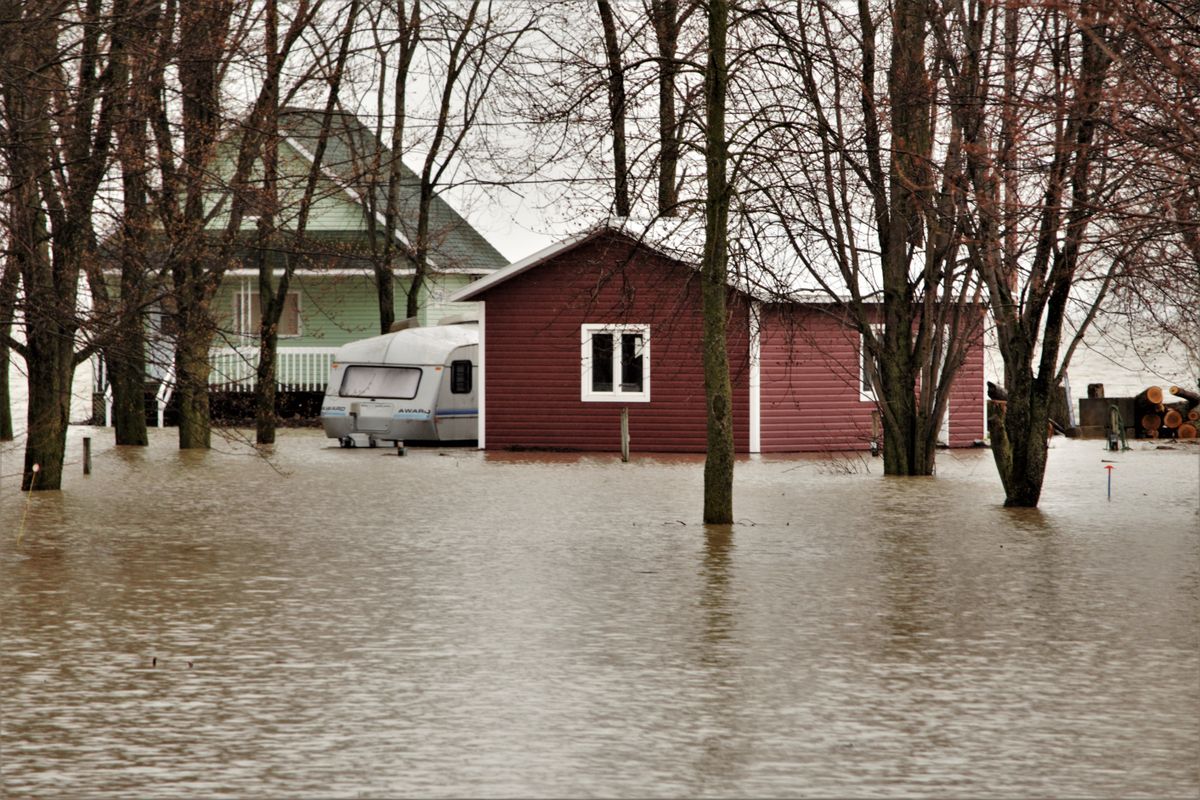
In a word: no. Here's where the coverage gap actually shows up.
Water that rises from the ground up, whether from a storm, overland runoff, or a nearby creek overflowing, is flood damage. Homeowners insurance excludes it entirely.
A failed sump pump or water backing up through a drain is also typically excluded from a standard policy unless you've added a separate water backup endorsement.
Wind damage from a hurricane may be covered by your homeowners policy. The storm surge or flooding that often comes with it is not.
Run by FEMA's National Flood Insurance Program. Coverage is capped at $250,000 for your home's structure and $100,000 for contents, with actual cash value (depreciated value) paid on contents. New policies have a standard 30-day waiting period, with exceptions for policies tied to a mortgage closing.
Written by private carriers instead of the federal government. Limits can run well above NFIP's caps, contents are often covered at replacement cost instead of depreciated value, and some policies add loss-of-use coverage if you're displaced. Waiting periods are often shorter than NFIP's, though some carriers pause new policies right before a declared storm.
Which one is the better deal depends on your home, your flood zone, and your budget. We'll compare real numbers from both.
Compare My OptionsFEMA and GAO data has shown that roughly one in five NFIP claims come from properties outside federally designated high-risk flood zones. Moderate- and low-risk areas still flood, and flood insurance there is often surprisingly affordable.
Prefer we pull it for you? Contact us and we'll check your address and explain what it means for your coverage.
A standard flood policy covers the building itself and the systems connected to it, along with the cost of cleaning up after a flood.
You're not required to carry it, but you're also not protected from the heavy-rain and runoff flooding that affects moderate- and low-risk properties every year.
If your new home sits in a high-risk zone and you have a mortgage, flood insurance is required. We'll help you get it in place before closing.
Flood and water backup are covered differently, and most homeowners find that out the hard way. We'll explain exactly what each would pay for in your basement.
No. Standard homeowners insurance excludes flood damage, including water that enters your home from heavy rain, overland runoff, or storm surge, no matter how the water gets in. You need a separate flood insurance policy to be covered for that kind of loss.
You can still flood. FEMA and GAO data has shown that roughly one in five NFIP claims come from homes outside federally designated high-risk flood zones, often after the kind of heavy rain that has nothing to do with living near a river or coast. Flood insurance is available, and often inexpensive, for moderate- and low-risk properties too.
A standard flood policy covers your home's structure, including the foundation, electrical and plumbing systems, furnace and water heater, central air, and attached stairways, plus flood-related cleanup costs like pumping out water and treating mold. Personal belongings are covered separately under contents coverage, which you can add.
Partially, and the details matter. NFIP flood policies cover basement structural elements and connected systems, such as your furnace, water heater, sump pump, electrical panel, and foundation, but not finished walls, flooring, built-ins, or most personal belongings stored there. We can walk you through exactly what would and wouldn't be paid out based on how your basement is finished.
NFIP, the federal government's flood program, caps building coverage at $250,000 and contents at $100,000, and pays actual cash value (depreciated value) on contents. Private flood insurance can offer much higher limits, replacement cost on contents as well as the structure, and sometimes added living-expense coverage if you're displaced, often at a comparable or lower price. We shop both markets to see which fits your home better.
It's required for homes in a FEMA-designated high-risk flood zone (a Special Flood Hazard Area) that carry a mortgage from a federally regulated lender. Outside those areas it's optional, which is exactly why so many homeowners who could use it don't have it.
Not usefully. NFIP policies have a standard 30-day waiting period before coverage starts, so a policy bought as a storm approaches won't help with that storm. Many private flood insurers also pause new policies, known as a binding moratorium, once a storm is imminent. The right time to buy flood insurance is well before hurricane season, not during it.
It depends on your flood zone, your home's elevation and construction, and the coverage limits you choose, so there's no single answer. The best way to see real numbers for your address is to get a quote; we'll show you NFIP and private options side by side.
FEMA's Flood Map Service Center lets you look up any address for free. We're also happy to pull it for you and walk through what it actually means for your coverage and your premium.
You're not legally required to carry it, but the flood risk itself doesn't go away when the mortgage does. If you own your home outright, flood insurance is still worth considering, since it's one of the only ways to recover the cost of flood damage.
Your elevation certificate, your home's elevation relative to base flood level, and comparing NFIP against private carriers all affect price more than most homeowners realize. Shopping both markets, rather than defaulting to whichever your lender mentions, is usually the biggest lever.
Right here. Fill out our quote form or call or text us at 908.379.0959, and we'll shop flood coverage for your home across NFIP and our private flood carriers.